Best Toys for 2 Year Olds: 20 Skill-Based Picks (2026)
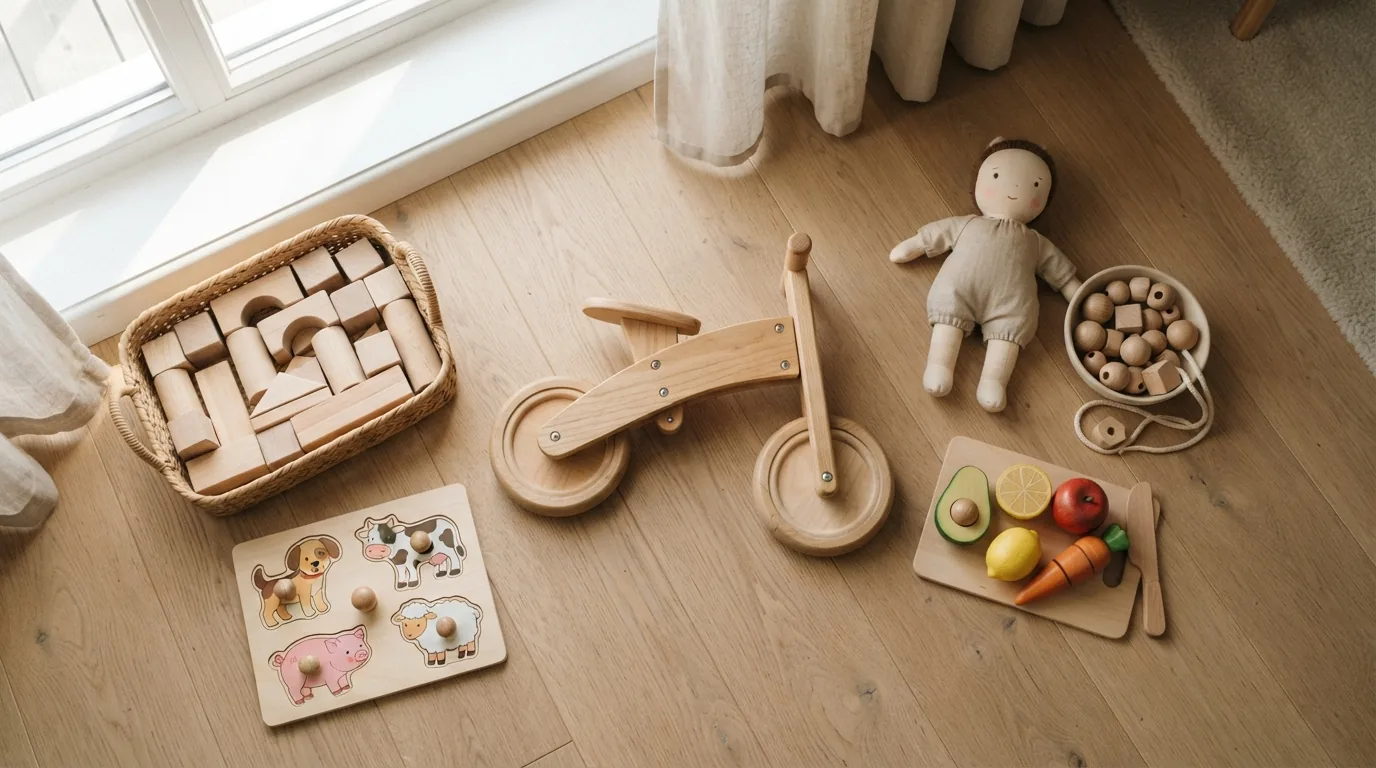
The best toys for 2 year olds match the skills a 24-to-36-month-old is actually working on right now: running and kicking (gross motor), threading and stacking (fine motor), naming and pretending (language and imagination), and figuring out how things fit (problem-solving). A balance bike, a chunky puzzle, a set of real-ish play food, and a bin of wooden blocks will out-earn a pile of light-up plastic every single time.
So that's how this guide is built — by skill, not by a random ranked list. Every pick is grouped by what it develops, checked against CDC 2-year milestones and AAP toy guidance, and tagged with an honest price band. If you're buying for someone else's toddler, the comparison table near the top will get you to a strong gift in about two minutes. If you want the why behind each one, keep reading.
What Are the Best Toys for a 2 Year Old?
The best toys for 2 year olds are open-ended ones tied to a developing skill: a balance bike or ride-on for gross motor, threading beads and knobbed puzzles for fine motor, realistic play food and a baby doll for pretend play, and wooden blocks or a multi-shape sorter for problem-solving. Aim for four to six well-matched toys over a dozen single-function ones — fewer toys reliably produce deeper, longer play.
How We Chose: Toys That Match 24–36 Month Development
Every toy here had to clear four filters. First, skill fit: does it serve something a two-year-old is genuinely working on? By 24 months most toddlers run, kick a ball, and play with more than one toy at a time, like putting toy food on a toy plate (Source: CDC, Milestones by 2 Years). Second, open-ended play — the toy should let the child be the active one. The American Academy of Pediatrics puts it plainly: the best toys "need not be flashy or expensive or come with an app" (Source: HealthyChildren.org / AAP, 2018). Third, safety, screened against the CPSC small-parts rule for under-3s. Fourth, honest pricing, banded so you know the commitment before you click anywhere.
This is a research-synthesis guide reviewed against CDC and AAP milestone guidance, not a sponsored roundup. For the philosophy underneath these picks, see our guide to open-ended toys for two-year-olds. And if your toddler just turned two, the picks here pick up exactly where our 1-year-old gift guide leaves off.
Best Toys for 2 Year Olds at a Glance (Comparison Table)
Here are all 20 picks in skill order. Price key: $ = under $20, $$ = $20–50, $$$ = $50+.
| Toy | Skill developed | Best age fit | Price band |
|---|---|---|---|
| Balance bike (no pedals) | Balance, leg power, steering | 24–36 mo+ | $$$ |
| Foldable climbing set / Pikler + ramp | Climbing, jumping, core | 24–36 mo+ | $$$ |
| Ride-on scoot trike | Pedaling prep, leg strength | 24–30 mo | $$ |
| Ball set (kick + throw) | Kicking, overhand throw | 24–36 mo | $ |
| Wooden balance stepping stones | Gross-motor balance | 24–36 mo | $$ |
| Chunky-knob wooden puzzles | Pincer grasp, matching | 24–30 mo | $ |
| Threading / lacing beads | Two-hand coordination | 27–36 mo | $ |
| Play dough + simple tools | Hand strength, squeezing | 24–36 mo | $ |
| Peg-and-stack board | Precision placing, color sorting | 24–36 mo | $ |
| Chunky crayons + paper | First mark-making grip | 24–36 mo | $ |
| Realistic picture books | Vocabulary, pointing, naming | 24–36 mo | $ |
| Realistic animal figures | Naming, sorting, small-world play | 24–36 mo | $$ |
| Emotion / feelings picture cards | Emotion words, empathy | 27–36 mo | $ |
| Wooden play food + cutting set | Pretend cooking, sequencing | 24–36 mo | $$ |
| Soft baby doll + basics | Nurturing pretend play, language | 24–36 mo | $$ |
| Toy tool bench or doctor kit | Role play, imitation | 27–36 mo | $$ |
| Wooden building blocks (set) | Towers, spatial reasoning | 24–36 mo | $$ |
| Multi-shape sorter | Shape matching, problem-solving | 24–30 mo | $ |
| Magnetic building tiles | Geometry, cause-effect, design | 27–36 mo+ | $$$ |
| Simple jigsaw puzzles (4–12 pc) | Trial-and-error, persistence | 27–36 mo | $ |
Best toys for 2 year olds compared by skill and age fit.
Gross Motor Toys: Balance Bikes, Climbers and Balls
For gross motor development, the best toys for a 2 year old get the whole body moving: balance bikes, low climbers, and balls. Running and kicking a ball are both listed as 2-year milestones, and jumping off the ground with both feet arrives around 30 months (Source: CDC, Milestones by 30 Months). Toys at this stage should feed that energy, not sit in a corner.
Balance bike ($$$, 24–36 mo+). A no-pedal bike is the single best gross-motor gift at two. The child scoots with both feet, learns to glide, and builds the balance that makes pedal bikes almost trivial later — most balance-bike kids skip training wheels entirely. Look for an adjustable seat that starts low enough for flat feet, and air or foam tires. It's a splurge that runs for three years, which is exactly what you want a $$$ toy to do.
Foldable climbing set or Pikler triangle with ramp ($$$, 24–36 mo+). Climbing is not a bad habit to break at this age; it's a drive to redirect. A dedicated climber gives the "scale everything" toddler a safe target and builds the core strength behind jumping and stair-climbing. Foldable models tuck against a wall in small apartments. If your child is a determined thrower and climber, that's normal schematic play — here's why toddlers throw and how to work with it instead of against it.
Ball set for kicking and throwing ($, 24–36 mo). One lightweight ball for kicking and one grippy medium ball for two-handed throwing cover both new milestones for the price of a lunch. Choose foam or soft rubber over anything hard, and skip balls small enough to fit through a toilet-paper tube — an easy home stand-in for choke-size.
Wooden balance stepping stones ($$, 24–36 mo). Low domed "stones" the child hops between turn balance practice into an indoor game on rainy days. They also stack, become "islands" in pretend play, and store flat. A quiet overachiever of a toy.
Fine Motor Toys for a 2 Year Old
The best fine motor toys for a 2 year old are knobbed puzzles, threading beads, play dough, and peg boards — anything that trains the small hand muscles behind holding a crayon and, eventually, a pencil. By two, most children hold one object in one hand while working with the other, like steadying a container to pull off the lid (Source: CDC, Milestones by 2 Years). That two-hands-cooperating skill is what these toys quietly build.
Chunky-knob wooden puzzles ($, 24–30 mo). Puzzles with big pegs to pinch train the same grasp as a crayon while teaching matching. Start with single-piece-per-slot boards (one animal, one hole), not interlocking jigsaws. The knob is the whole point — it forces the pincer grip.
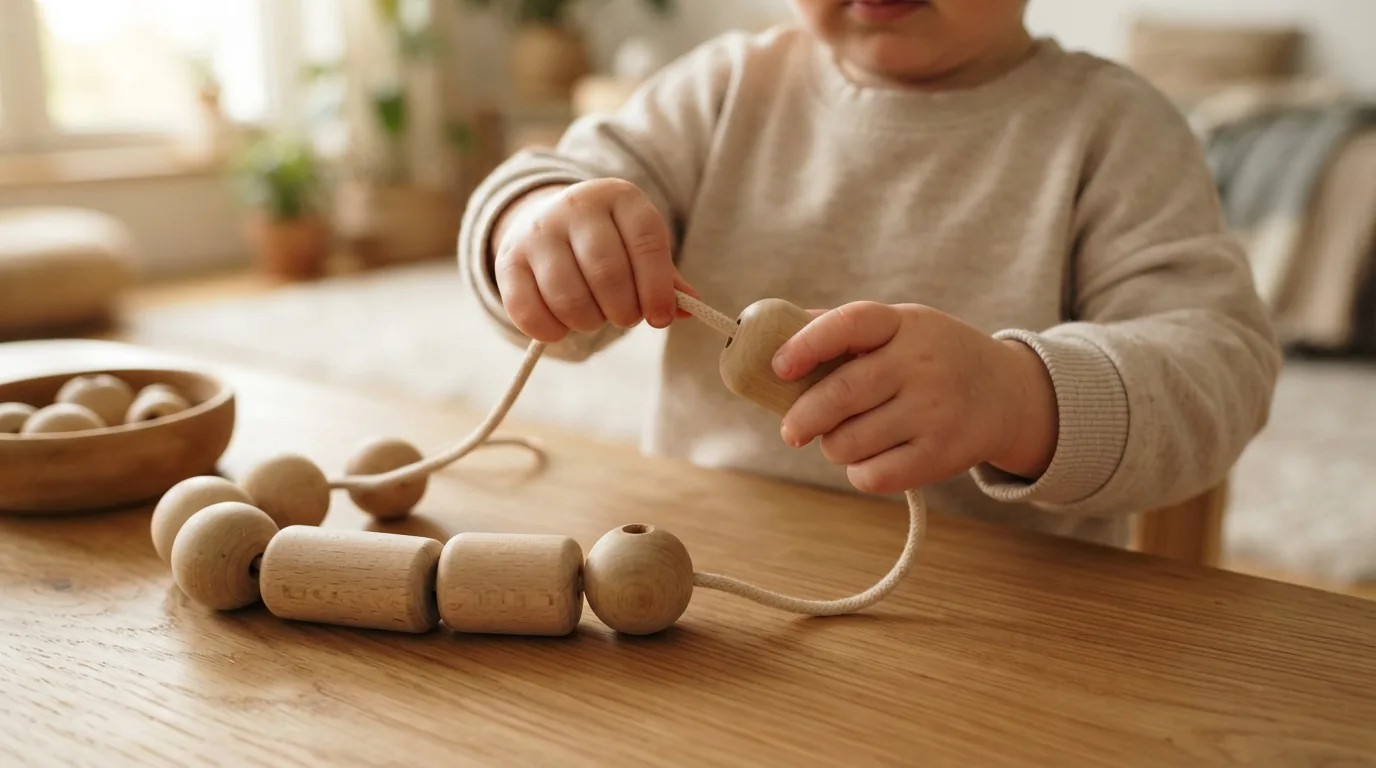
Threading or lacing beads ($, 27–36 mo). Getting a lace through a bead is a genuine two-hand challenge, and the concentration it demands is something to behold. Buy large wooden beads, never small ones, and put them away between sessions; loose beads are a choke risk if a younger sibling is crawling around.
Play dough with simple tools ($, 24–36 mo). Squeezing, rolling, and poking dough builds hand strength better than almost anything, and a cutter or roller adds sequencing. You can make it for a couple of dollars, but a good non-crumbly commercial dough lasts longer. Supervise, because two-year-olds still taste-test.
Peg-and-stack board ($, 24–36 mo). Placing pegs into holes hones precision, and sorting them by color layers in an early cognitive skill. It grows with the child: random placing at two becomes patterns and counting by three.
Chunky crayons and paper ($, 24–36 mo). First scribbling is a real milestone, and fat, short crayons fit a fist better than thin ones and encourage a finger grip over a whole-hand grab. Washable, obviously. Tape a big sheet to the floor and let them go.
Language and Talking Toys
What builds a two-year-old's language most isn't a "talking" toy — it's toys that get you talking with them. Around 24 months a child starts putting two words together ("more milk"), and by 30 months vocabulary jumps to roughly 50 words and simple two-word combinations with an action word, like "doggie run" (Source: CDC, Milestones by 30 Months). Books, figures, and naming games do far more here than any battery.
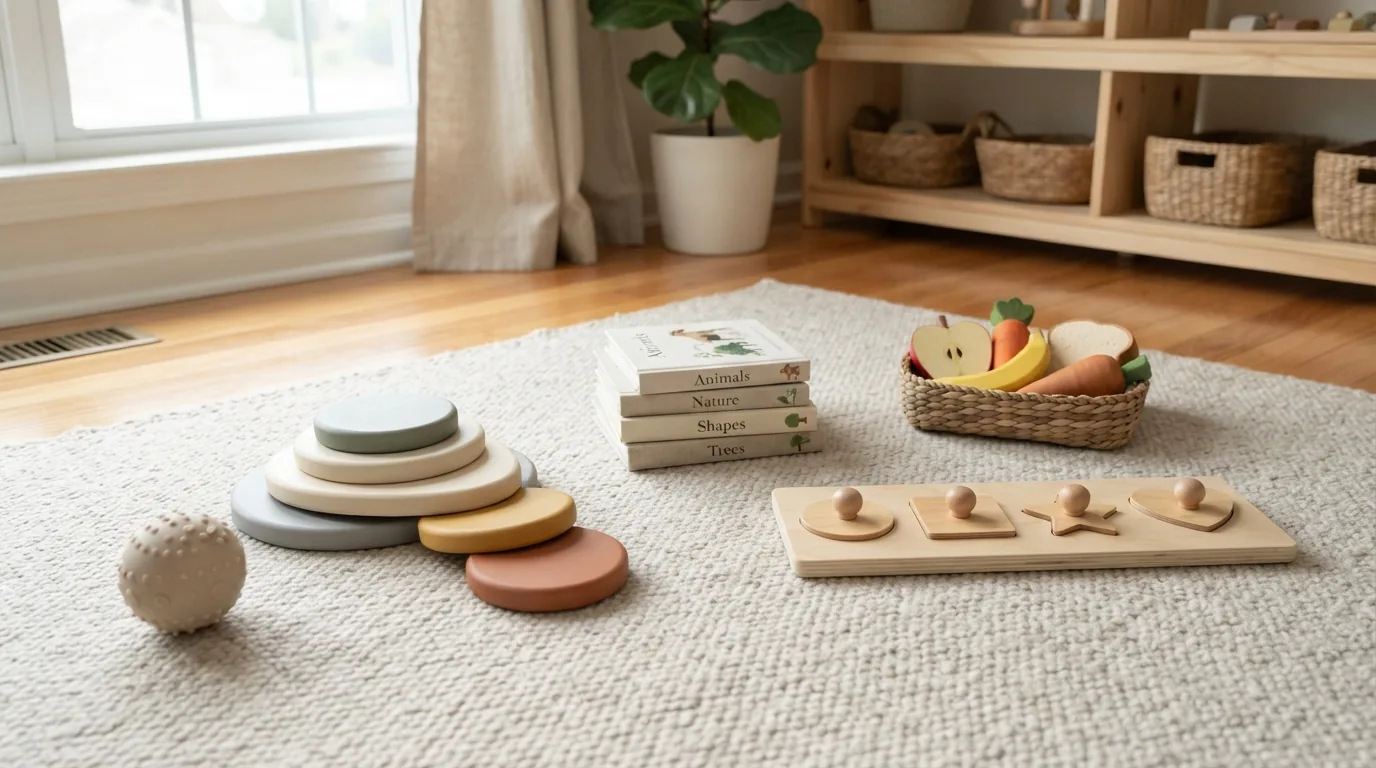
Realistic picture books ($, 24–36 mo). Photo-based books of real animals, vehicles, and faces invite pointing and labeling, and pointing to pictures on request is itself a 2-year milestone. Buy a small rotating stack rather than one big anthology. Torn pages mean they're loved.
Realistic animal figures ($$, 24–36 mo). A set of true-to-life animals (not cartoon versions) becomes a naming game, then a sorting game, then small-world pretend play by 30 months. Check every figure against choke-size — many farm sets sneak in tiny lambs and chicks.
Emotion or feelings picture cards ($, 27–36 mo). Cards showing faces — happy, sad, mad, scared — give a toddler words for what's happening inside them, which is the start of self-regulation. Two-year-olds notice when someone else is upset (Source: CDC); naming those feelings is the next step. These pull double duty in the middle of a meltdown.
Pretend and Imaginative Play
Pretend play takes off between two and three, and the best imaginative toys are the ones that imitate real life: play food, a baby doll, toy tools. By 30 months most children use one thing to stand in for another — feeding a block to a doll as though it were food (Source: CDC). Toys that mirror the grown-up world give that new skill somewhere to go.
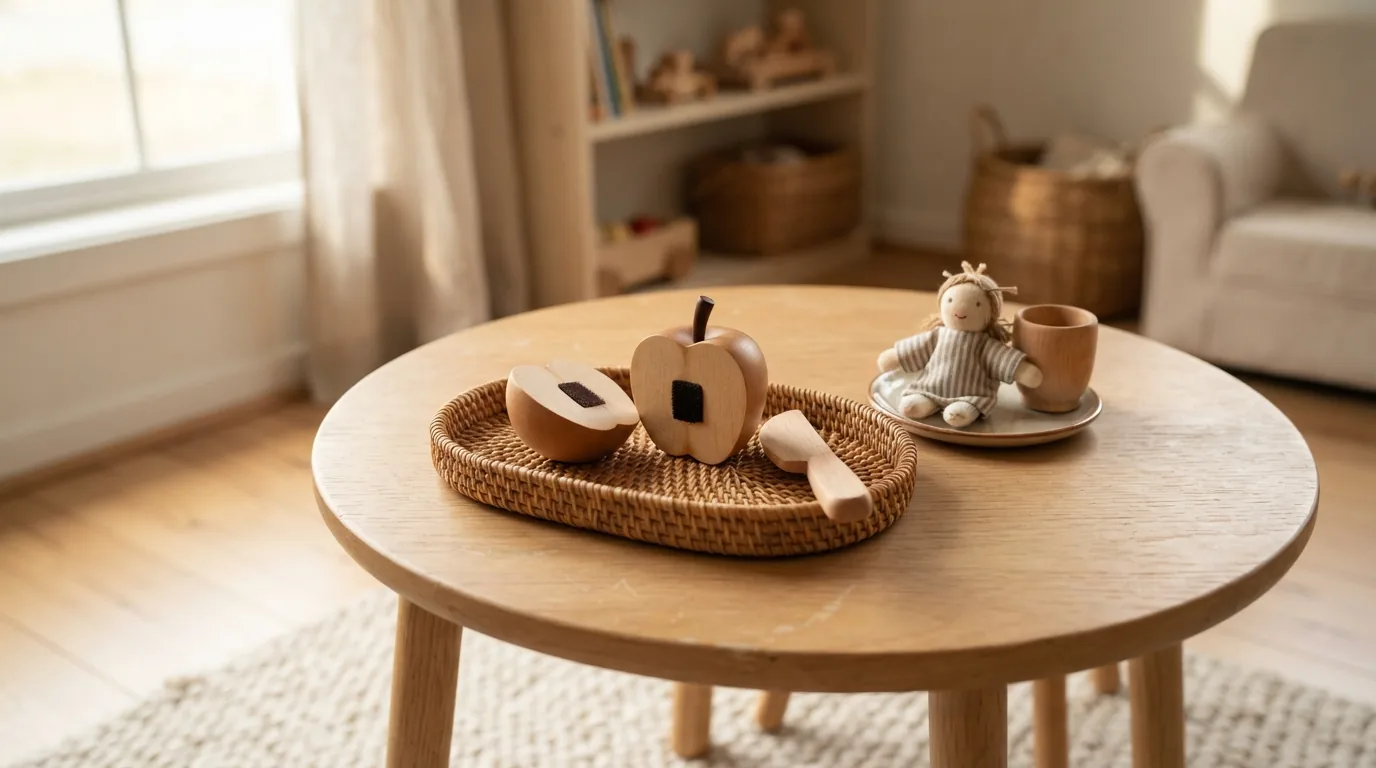
Wooden play food and a cutting set ($$, 24–36 mo). Velcro-joined fruit and veg that "slice" apart with a wooden knife is reliably a top-three hit at this age. It builds pretend cooking, sequencing, and — with the toy knife — a bit of hand coordination. Wooden versions survive years of chewing and dropping; the cheapest plastic sets crack fast.
Soft baby doll with a few basics ($$, 24–36 mo). A simple doll with no electronics invites feeding, rocking, and wrapping, and nurturing play grows empathy and language in every child regardless of gender. Add a small bottle or blanket, not a 40-piece accessory kit. The child supplies the story; the doll just needs to be huggable.
Toy tool bench or doctor kit ($$, 27–36 mo). Role-play sets that copy real adult jobs fuel imitation, which is how toddlers make sense of their world. Rotate one in rather than owning six; a single well-made set gets replayed more than a shelf of themed kits. For real-tool versions of this instinct, see our guide to Montessori practical-life toys.
Problem-Solving and Building Toys
For problem-solving, the best toys for 2 year olds reward trial and error: blocks, shape sorters, magnetic tiles, and simple jigsaws. Two-year-olds try switches and buttons to see what happens, and by 30 months they show real problem-solving, like dragging a stool over to reach something (Source: CDC). These toys make that thinking visible.
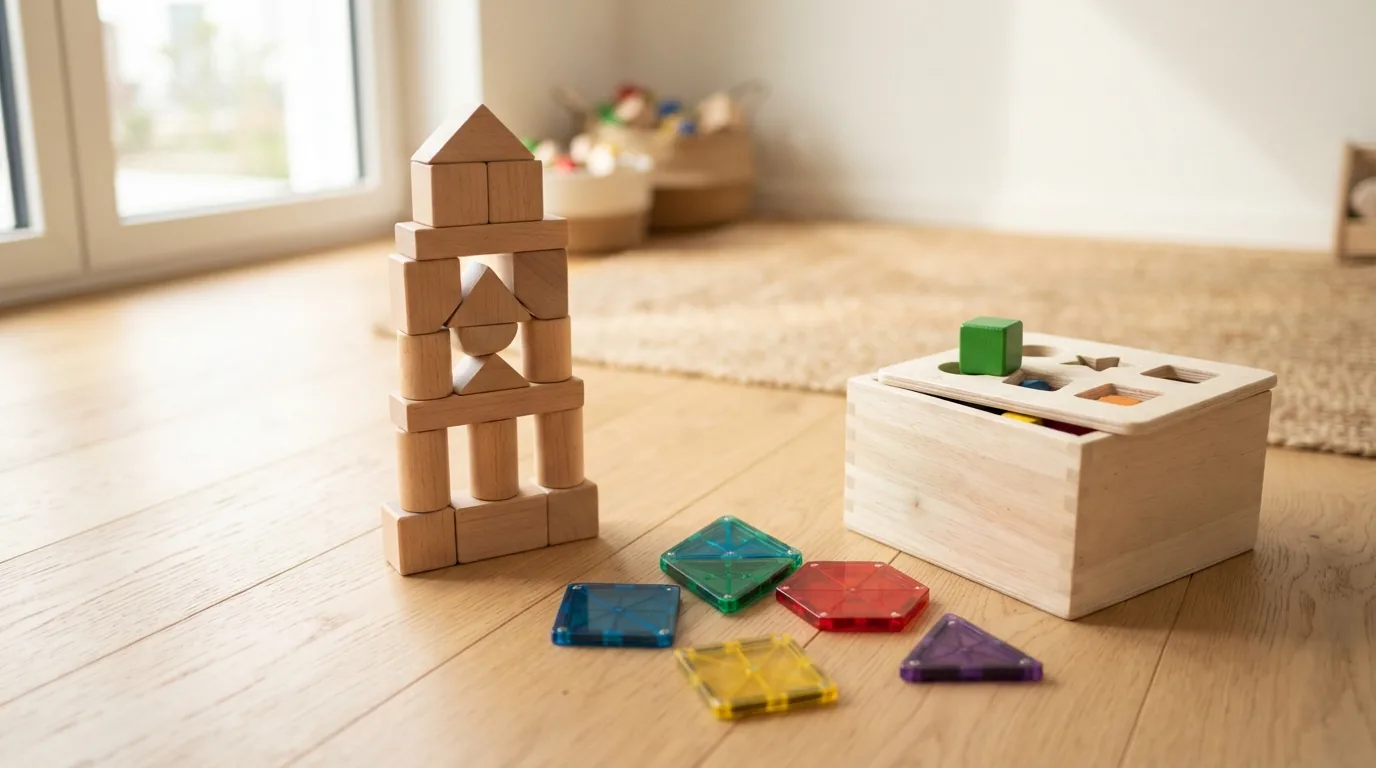
Wooden building blocks ($$, 24–36 mo). Plain wooden blocks are the highest-ceiling toy in this guide. A two-year-old stacks a tower of six and knocks it down; a five-year-old builds a castle. Buy a generous single-color or natural set over a small themed one — quantity is what unlocks the ambitious builds later.
Multi-shape sorter ($, 24–30 mo). Now that posting one shape is easy, a sorter with three or four shapes adds a real matching puzzle. If your child gets frustrated fast, it's a sign they're not quite ready — put it away a month and try again rather than "helping" every piece in.
Magnetic building tiles ($$$, 27–36 mo+). Tiles that click together teach geometry, balance, and cause-effect, and they scale from flat mosaics at two to elaborate 3D builds at six. They're pricey, and the very cheapest sets have weak magnets that frustrate more than they help — this is one place to buy fewer, better tiles. A genuine grow-with-them investment.
Simple jigsaw puzzles ($, 27–36 mo). Move from knobbed boards to chunky 4-to-12-piece jigsaws to build persistence and spatial reasoning. Start low and add pieces as they master each level. The struggle is the feature; resist finishing it for them.
Toys for a 2 Year Old Boy vs a 2 Year Old Girl
The best toys for a 2 year old boy and the best gifts for a 2 year old girl are, developmentally, the same list — running, threading, pretending, and building don't split by sex at this age. So shop the skill sections above, not a color-coded aisle. Where interests do start to show (one child loves vehicles, another loves animals), follow the child's actual enthusiasm rather than the marketing. A truck-obsessed toddler still needs fine-motor and pretend play; a doll-loving one still needs a balance bike. And yes, keep the doll on the boys' list and the blocks on the girls' list — nurturing play builds empathy and language in boys, and spatial play builds reasoning in girls, both of which the research backs.
What to Skip: Toys That Look Fun but Stall Play
A few categories to leave on the shelf, whatever the box promises.
Battery light-and-sound toys. When the toy performs, the child watches. AAP guidance is direct that simple, traditional toys drive more back-and-forth talk than electronic ones (Source: HealthyChildren.org / AAP, 2018). One noisy toy in the house is fine. A collection of them is a collection of one-week wonders.
Toddler tablets and "learning" screens. For children 18 to 24 months, the AAP recommends only high-quality programming watched together with an adult, and for ages 2 to 5, no more than one hour a day of co-viewed media (Source: AAP, Media and Young Minds, Pediatrics). A tablet shaped like a toy is still a tablet.
Single-function anything. A toy that does one trick is finished in a week. Open-ended materials — blocks, dough, dolls, play food — get replayed for years, which is the whole case for buying fewer, better toys.
How Many Toys Does a 2 Year Old Actually Need?
Fewer than you think — four to six in active rotation. In a University of Toledo study, 36 toddlers played with either 4 toys or 16; with only 4 available, they played with each toy about twice as long and in more varied, more creative ways (Source: Dauch et al., Infant Behavior and Development, 2018). Abundance scattered their attention. Scarcity deepened it.
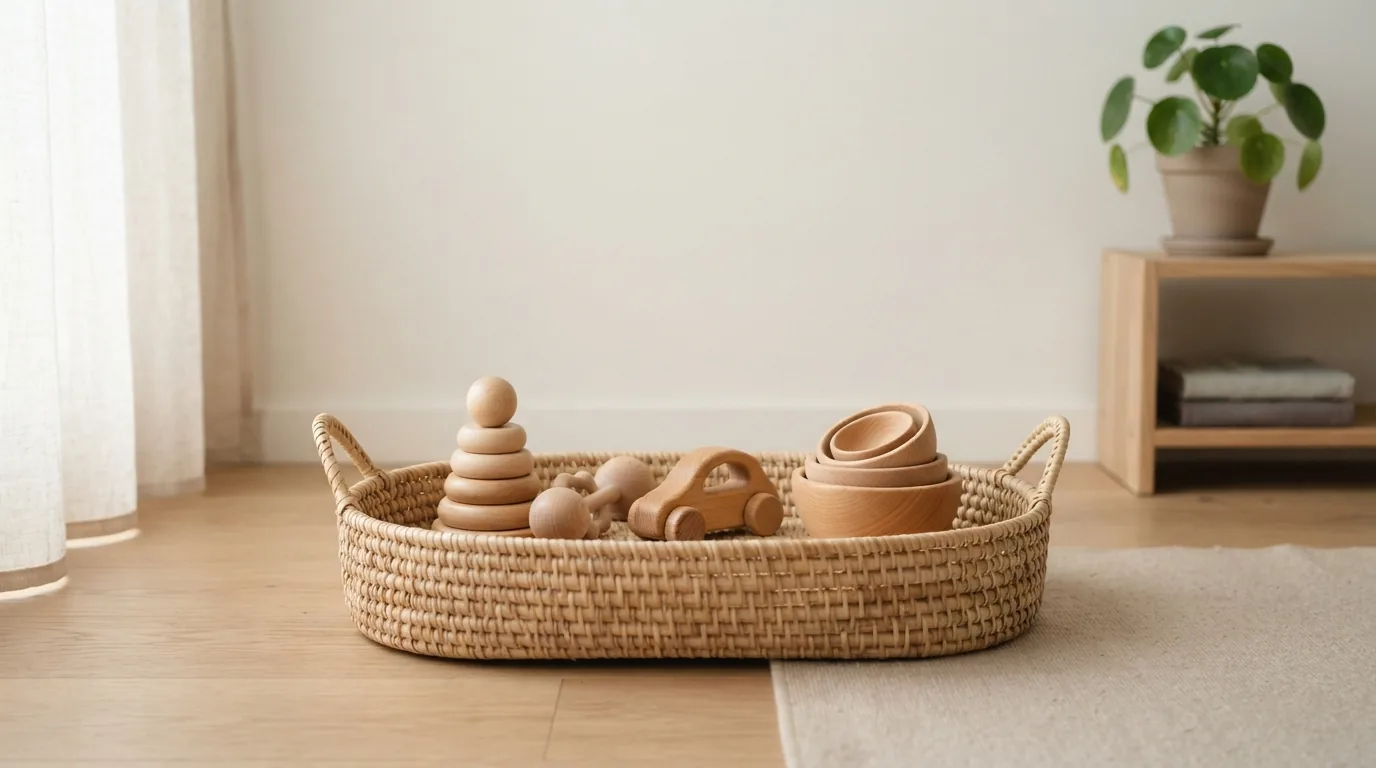
Practically, that means two moves. Keep most toys boxed and rotate a small set every week or two, so old toys feel new again. And for a birthday or holiday, ask relatives to coordinate — one pooled splurge (balance bike, climber, or a big block set) plus two or three small skill-matched picks beats ten separate boxes that all get half-opened. Ready for the next stage already? Our best toys for 3 year olds picks up where this list ends.
FAQ
What are the best toys for a 2 year old?
Open-ended toys matched to a developing skill: a balance bike or climber for gross motor, knobbed puzzles and threading beads for fine motor, realistic play food and a baby doll for pretend play, and wooden blocks or a shape sorter for problem-solving. Four to six well-chosen toys beat a dozen single-function ones.
What do 2 year olds actually play with?
Real-life imitation and simple physical play. Two-year-olds put toy food on toy plates, stack and knock down blocks, run and kick balls, and copy adult tasks. Household objects — pots, boxes, measuring cups — fascinate them as much as anything you can buy, so don't be surprised when the kitchen drawer wins.
What are good educational toys for 2 year olds?
The most "educational" toys at two rarely say "educational" on the box: wooden blocks (spatial reasoning), threading beads (fine motor), shape sorters and simple puzzles (problem-solving), and picture books (language). The AAP notes the best toys need not be flashy or come with an app (Source: AAP, 2018).
Are toys for a 2 year old boy different from a 2 year old girl?
Developmentally, no — running, building, pretending, and fine-motor skills follow the same timeline regardless of sex. Shop by the child's stage and genuine interests rather than by pink or blue aisles. Keep dolls available to boys and blocks available to girls; both build skills every toddler needs.
How many toys should a 2 year old have out at once?
Around four to six in active rotation. Toddlers given 4 toys instead of 16 played longer and more creatively with each (Source: Dauch et al., 2018). Box the rest and swap the set every week or two so familiar toys feel fresh again.
What should I get a 2 year old who has everything?
Pick an experience or a grow-with-them open-ended item over another single-use toy: a balance bike, a big set of wooden blocks, magnetic tiles, or a climbing frame. All of these keep earning their space for three or more years, which is exactly what a child with a full toy shelf needs.
Sources
- CDC — Milestones by 2 Years (24 months) — runs, kicks a ball, plays with more than one toy at a time, holds one object while using the other hand, says two words together, points to things in a book.
- CDC — Milestones by 30 Months — uses things to pretend, simple problem-solving, jumps with both feet, ~50 words and two-word action phrases, plays next to other children.
- HealthyChildren.org / AAP — The Best Toys Go Back to the Basics — simple and traditional toys drive more parent-child talk than electronic ones.
- HealthyChildren.org / AAP — What to Look for in a Toy — open-ended toy selection criteria for young children.
- AAP, Pediatrics — Media and Young Minds — screen media guidance for 18–24 months and ages 2–5.
- Dauch et al., Infant Behavior and Development (2018) — University of Toledo study: 4 vs 16 toys with 36 toddlers; fewer toys produced longer, more sophisticated play.
More from Toy Guides
- Best Toys for 3 and 4 Year Olds (2026 Skill Guide)The best toys for 3 and 4 year olds by skill: pretend play, building, fine motor, gross motor, and puzzles, checked against AAP and CDC milestones.
- Montessori Infant Toys by Month: 0–12 Guide (2026)The complete Montessori infant toy sequence, month by month — mobiles, grasping beads, object permanence boxes, and stackers matched to each stage, 0 to 12 months.
- Montessori Toys by Age: The Practical-Life Guide (2026)What actually makes a toy Montessori (hint: not just wood) — plus the best picks by developmental area and age, with a practical-life focus.